‘deliberate beauty’
This phrase was originally named and written about by Mona Eltahawy, an Egyptian-American feminist author and revolutionary figure, voicing so many confessions that our society doesn’t dare speak. Her moving and powerful article on ‘deliberate beauty’ opened a flood of memories and questions which I attempt to explore in the piece below.
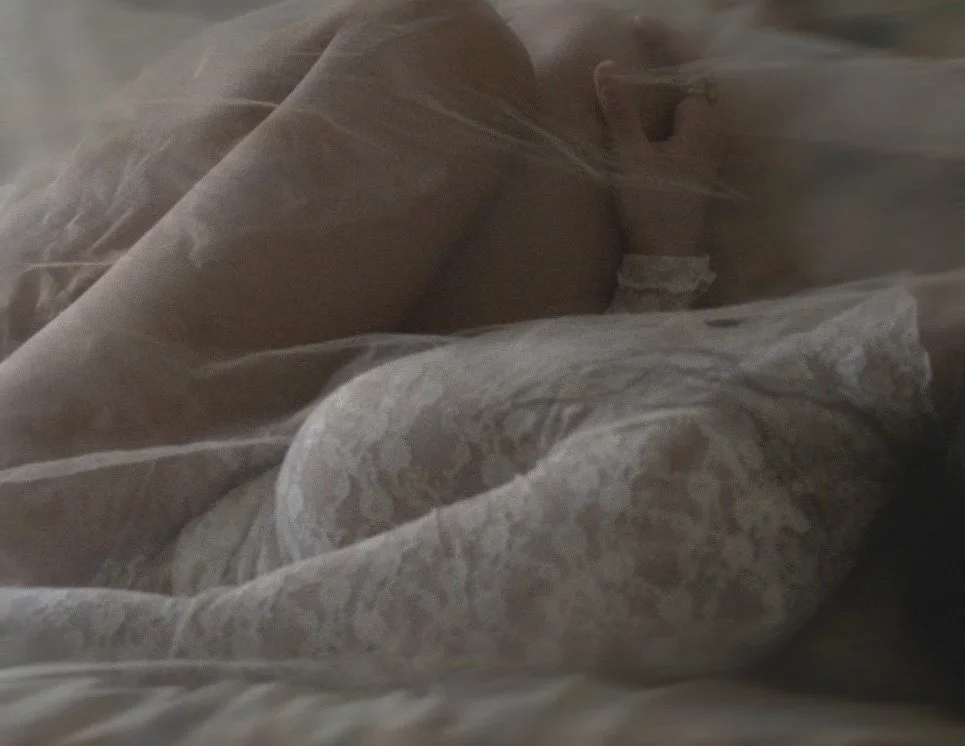
Let me tell you about my eternal hunt for beauty within the landscape of its antonym, where goats still bang the walls of my father’s house long after they’ve passed. Where the soil anchors its bed under our nails, and there’s nothing we could touch without spilling unnecessary truths about who we are and where we come from.
I was raised in the ecotone between deep poverty, and the softest wealth. Every week was a migration between the mansion at the cul-de-sack of Live Oak, overseeing the forest that oversaw the river, and the white rotting house on Iverson that oversaw nothing — both brick and plastic bodies standing at the bottom of a hill, one green, the other gray. One tempting you in the circle of lights and the soft yellow behind the chiffon curtains. The other was a square of black windows, lights out to cut down the cost of life, warning you to keep away.
Beauty was how I knew I was safe.
It also let me know there was a price for this safety.
And I paid with every straightened strand in the early morning before the sun rose. Every confession I tucked beneath an artificial layer of skin. Every smile I delivered in the place of the scream that wanted to rise. For five days of the week, I lived with my grandmother, who let me know the conditions of her consent to raise me: maintain the order of beauty within this home. Beauty was our contract: if I remain loyal to it, I stay. If I betray it - I leave. If there was grief, I wasn’t allowed to reveal it. If there was desire neglected, I wasn’t allowed to communicate its absence.
The scream.
I could only release it outside the territory of beauty, in my father’s neighborhood — where boys, exiled into the suburbs, displaced by the invasion of beauty into their city, roamed the summer shirtless, wild in a freedom I witnessed but couldn’t touch. My father would gather them in our living room in the evening — baptizing them into an Islam that gave them an hour away from whatever it was they didn’t want to return home to. They repeated la ilaha illa allah by the oil lamp — and I would watch the boys from the shameless dance of shadows, wanting to appear beautiful to them. I was not. Here the land took me into its war against beauty. It threw rashes against my face, cracked my skin, matted my hair in the absence of water that wasn’t collected rain. Every weekend, I belonged to this corner of the earth that belonged to nothing.
Still. Here — in the chock hold of this decaying farm, my father’s acre, mirroring to him everything he was, and all that he would become — here, in the prison that allowed for rage, I could scream. The absence of beauty offered me permission to join its antonym. To strip this smile, to lose myself in the invisibility of sleeping in a space no one wanted to visit. I unlocked this jaw. I breathed my way out of beauty and into truth.
But this land too would let me know that there was a price for truth.
And I paid it with my father’s hands in the dark, his tongue against my ear, waking me for prayer. Using the mid-night duty as an excuse to enter my room, disguising his lust under a holy calling.
I paid in the hours I was taken out of his house and shoved into a mosque, in the stale silence of a loveless space that disguised the prison it was in the deceptive replica of architecture… Back at the farm, I could scream, but only within the flood of the many more reasons to scream that it delivered. The absence of beauty opens something. It also breaks many things too.
Years passed and I clawed my way out of both homes and stumbled into an exile of both territories. I distrusted beauty — how it hid… if only you knew how much it could hide. The fear of my father arriving on Friday night to take me, the tired eye of a young woman eyeing the door for her mother’s return, listening to a phone that never rang .. and through this time, beneath the fabric, my skin screamed beneath the ivy of eczema, spilling whatever the silence contained along the territory of my body.
But I learned that even the sound of skin attempting to save you can be muted.
I hated beauty, hated it mostly for what it kept from me. How generous it was with the faces of the other women in the family, whose features were rivers of love and attention they drank from without knowing anything about hunger. Syrians carry an obsessive reverence for beauty. If something was missing in your life, you needed only to walk the streets and be watered by the eyes you were showered you with. Without beauty, there was nothing I could do about the hunger, the cruel drought.
Later, beauty became how I cheated, how I stole. How I bathed myself when there was no water. How I rebelled while I couldn’t in the eyes I pulled towards me walking in front of my veiled grandmother or beside my father’s swaying rosary. Tired of waiting for beauty to arrive, and seeing it had already visited everyone else in the family, I began to carve it into me. I spent hours in front of the mirror… in shame or in defiance, I’m not sure.
Perhaps this ‘deliberate beauty’ was a secret message to myself, two floors above the grey farm, a whispered we’ll make it out of here one day. Or — you are not as ugly as your father’s hands make you feel. Far from the false, expensive beauty of my grandmother’s home — I sought the kind of beauty that mattered. The kind that made you survive. The kind that reminded the body it was still alive, even in its grave, it still breathed. Beauty preserved those tiny, rebellious breaths. I was recused by cvs mascara, by the orange tan I smeared against my skin, by the moose that covered the smell of showerless weekends. Beauty was the cigarette smuggled through the prison.
Beauty as a museum of glassed art
Beauty was my grandmother’s bread.
Truth would have meant movement. It would have meant the opposite of wealth. It would meant choosing between the sun-lit, river-bordered mansion with the doctor and the tiny studio she had bought for herself in a red brick building — a studio she would eventually hand me the keys to when it was my turn to run.
My grandmother was an incredibly gifted and stifled artist— her block matching the intensity of her power. Having moved to the US at 17 after marrying my grandfather (bringing along with her her sketchbooks), she delivered three kids within a few years. In her mid 20s, crushed from her failed attempt to return to her life in Damascus (something my grandfather had promised when he married her), a friend of hers suggested she enroll in a college to study art. She tells me something lit in her when she heard this. Being the woman she used to be, she fought my grandfather to enroll. And this is where our lineage holds its breath. Finally, the medicine of rebellion. But instead of pursuing the art that would free her, she pursued the art that was safe, the kind that allowed her to keep the past closed and tucked away. She began with a single painting of Damascus: the home she left, the city that held a broken promise, then she closed it forever, in her art, in her body, and went on to paint the forced beauty of a white country she had to reckon with. She pursued the art of beauty, the art of polishing interiors and selecting fabrics. The art that delivered beauty as a respite from the truth. I understand. If you could paint over the horror, find the furniture that matches the colors of your lie, what would you compel you to do otherwise?
On the days when she cared, in those rare pockets of time, I became my grandmother’s art project. She poured what an artist would put into canvas onto me: all the unspoken rage, the chaos of memory, of desires unlived. I carried the upward brushstroke of a smile that clashed against the landscape it was circled by. My body was her surrealist container, holding the harshest contradictions, each one cancelling the truth.
I was The Scream, painted beautifully.
When is beauty a celebration, a defiance, and when is it a distraction, a veil?
My memory circles around the stunning space of the mansion she lived in.. the way god’s light poured through the two story windows, the way those grand stairs curved before the entrance, making you feel so important as you walked down towards the large oak door, opening to the guests that arrived regularly, distracting her just as much as beauty did. I remember her library room with its gold panels, the soft reflection of the forest’s shape above her desk, never a paper out of place. I remember standing within brown room with its antique novels and the delicate two step descension into the space where I made my long-distance calls to my mother once a month. To distract myself from her indifferent tone, I would use the call to look on to the boys who had just moved in to the house across from us. What would later get me in trouble took its first breaths in this cube of beauty. And I would learn, soon afterwards, that there is a kind of beauty that is celebrated, and a beauty that is punished. A life force that is honored and one that is deemed dangerous.
Beauty is the lover who will betray you
Beauty was a keeper of secrets. Once, having been called by the principle’s office at the Saudi Arabian Islamic school I attended, I found my grandmother’s tear-stained face receiving the news of something horrible that I hadn’t done. I had no chance of denying it. That school had anchored me in its vengeful gaze from the moment I was a little girl. It was brutal in the way it pursued me, exiling me for all sorts of things I hadn’t done. And that day haunts me.. still, and forever.
We drove back together. I needed to speak. I needed to be believed. I needed to be held against the betrayal of this massive school, these veiled faces turning away from me one by one. I needed to be taken out of that place. But with the cold shoulder of a woman who didn’t want to see anything that was not beautiful (which are most necessary truths), she walked me into the salon and told them to paint my toenails red. I remember the writhing, torturous agony of being eleven years old, in the early years without my mother, holding back the horror as I watched them paint my toes, under the green flower my grandmother had pinned to the top of my gold heals. I have never since then had my toes painted at a a salon.
In silence, she drove me straight afterwards to the house of her friend who worked for the Saudi Arabian royal family. Their daughter was having a birthday, and I was to attend as if nothing happened. I was allowed to reveal nothing. Show nothing. As the girls ran across the room in their dresses, screaming, dancing, I stood frozen in the costume of a false beauty — and on that evening I understood perfectly the price I would have to pay for my safety.
When does beauty become our own again? When does it cease to be the adopted survival it was? When is it no longer censorship? And when does it get to be experienced without it costing us our lives?
When is beauty no longer the ruler that measures how far I stand in safety? When does its absence cease to evoke danger?
When does it become acquired in any other way that is not stealing?
The final war with beauty
Life .. is a beautiful woman passing me. I try to reach for the white fabric of her, but I’m scared to touch her with the soil of these hands.
This is what I believed of beauty for so long. She was someone else’s possession. She didn’t belong to the ones who loved her, who sought her, who desired her, but to the ones who were like her. To her own - to women who ate the proper way, and took their showers each day, and were never encountered imperfectly. Beauty was my grandmother in all her perfection, close enough to touch, and never touched. Where love tortured me in the proximity. Within her (conditionally) shared home of beauty, where I was forever handled as a guest, we were mirrors of the other. And where we could have been anything, we chose to become an end. Where any story could have been written, we left the paper untouched.
Perhaps the war ends without resolution, and I walk myself to the truce of beauty as a territory of contradiction. Beauty as confession and erasue. As a fight for life and against it. As preservation and destruction. As fertilizer and poison.
I wonder what, in my older years, am I erasing in the lipstick? And what, in my younger years, was I attempting to confess to the eyes around me in the daring red of my lips?
See how beauty can carry both defiance and censorship?
Maybe - I shed one veil only to trade it for another: the mask of the proper woman I never was for the longing of beauty that still feels like betrayal. Why else am I careful not to open the door to my room without looking into the mirror? Why else do I hide in gatherings on days where my face doesn’t look as I want it too? Why else does my art feel like a tidy portfolio and not like the hurricane it needs to open into?
What are the consequences for being the woman I am?
…desiring beauty in dangerous ways, using it to hold down what wants to leave, and inviting what doesn’t want to arrive.
Beauty as a stolen possession, where the pursuit costs me the truth that relies on stillness.
Beauty as obsession, and the belief that the desire contained within that obsession prefers my distance. It does not belong to me — hence why I steal.
My life is a collection of stolen beauty — elusive fog I gathered in a jar to soften the truth, mask the urgency, subdue the intensity. In the midst of this hunted white air, I traded my necessary war for a softer seat in life that didn’t ask for much at all — until I was strong enough to abandon this lie too.
Beauty is the ostentatious mosque towering above poor, struggling Arab villages. A sight that provokes a wild rage in me.
Beauty is the contradiction I am because I love the safety of a decorated church. I love the delivery of the divine through the paintings I craved to witness within our own houses of worship, through the music we never get to hear.
Beauty is the house where I will always be a guest.
One day I find traces of its visit in my features, the next day it’s gone. It’s the guest that comes and goes on its own desire. It abandons me just when I need it: on the night I am visiting a lover, or in gatherings where I have nothing to see and no beauty to hide behind.
Beauty was the ally of all my lovers, tucking deception in the curls of lashes, the soft arch of a chin in sleep, muting the feeling that something wasn’t right. When it doesn’t serve you, beauty floods the space around you. When you need it most, it eludes you, ignoring your letters, your calls.
Beauty was the soft yellow room in my grandmother’s house, where I collapsed after every failed attempt to enter life. It lulled me into a dangerous sleep while every bone urged me to run.
It toys with the senses; distracted, it robs the the tunnels of my ears, blocks a necessary arrival, and the sound of many warnings I missed.
Beauty is the home I left and could never leave. The poem I throw away and the copy I keep hidden in my pocket. The stranger across the room I pretend not to notice, and the one that keeps me from leaving.
Beauty is the dance of wanting and unwanting, of desire dressed and undressed. Kissed and never spoken to. Pursued and hated for the pursuit it moves you through against your will.
Beauty is the poem extending towards the truth, and failing because there was no beautiful way to say it.
Except for today, I’ve never asked to see what I’ve lost in the house of beauty.