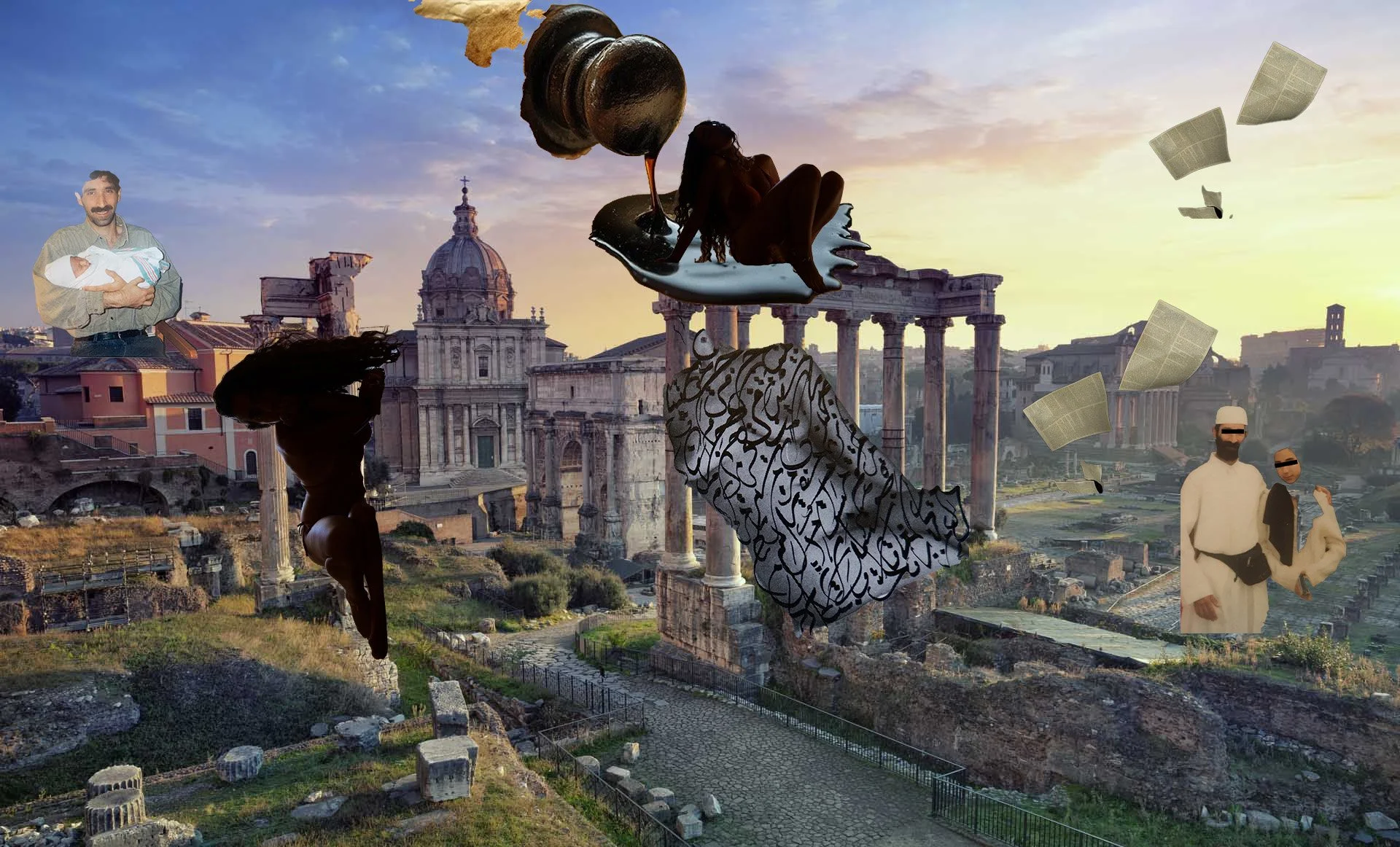
She walks me to the avenue of bodies breathing their way out of the past.
I follow her into the mosque where a woman leads the healed mass in prayer.
In this world, the divine and the body are aligned, and religion is the belief that the feminine waters the holy.
I am walking the earth of a poem written for the women exiled from Allah’s territory: living through the freedom of their history’s antonym. All is beautiful and all is well. But in arriving in the paradise of a religion written by a woman, I realize we’ve missed the barzakh of the scream.
A poet once told me: there is a danger and a beauty to womanhood. The beauty is what she is capable of creating. The danger is what she misses in the hurry to create.
In reaching for a more tender Islam, a softer face of god, an unwalled prayer room, a scripture-less direction — we’ve skipped the temple of screams. I was taught how to breathe before I had the chance to release the howl of the history I lived. I was shown a mosque where women lead prayer before I was walked to the rooms where the two worlds merge in the divine courts of justice. So man goes off and does his harm, and woman goes off and repairs it elsewhere. The two worlds remain separate: the world of harm and the other of healing. But where is the nepantla, the ecotone where the two ecosystems touch, where the riot of unspoken words is heard not by the ones who can receive them softly but by the ones whose reception will spill into rupture.
And we are in need of rupture.
Our healing work takes place too far from the source. Where is the woman walking back to the fires of the red-carpeted room and the prison of glass and curtained partitions? Where is the room within man’s mosque to bring together the wounder and the wounded? I can spill this scream far in the belly of a forest or I can spill it in the ear of the one who carries its seed. The same scream: one stuns the silence of a space that needed wakening, the other disturbs nothing and leaves the place of harm untouched. One stops a sheikh in his prayer, the other leaves him his peace to carry on without the knowledge of the pain being poured into the bodies bending behind him.
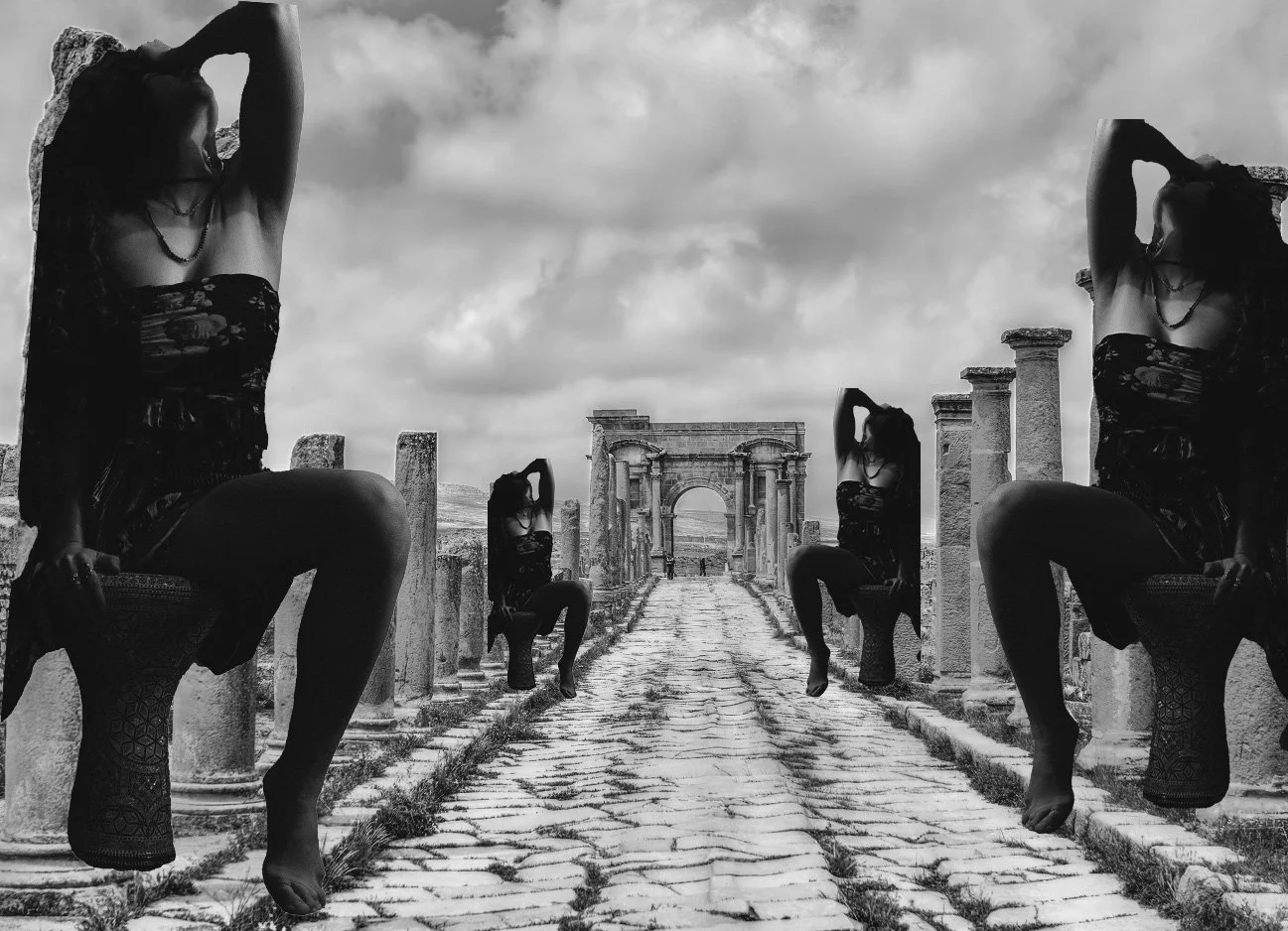
A journalist follows a friend of mine into a crowd eagerly waiting for his performance. The journalist remarks on the excitement of the audience and my friend replies, “This is the kind of room where I’m welcome. I want to go to the rooms where I am not welcome.”
Wow. The courage..the raw and necessary truth of that confession. Before we pack our bags and swallow the pills of many miles… where is the pause, the selah in our invented prayer… the caesura in a poem writing a new, safer mosque?
I’ve walked the bridge between these worlds and found it empty. I found no one standing under the arch, no one above the river. Those who had crossed had crossed. Those who wanted to stay stayed. I stood alone on the bridge — prepared to leave, prepared to stay. Perhaps it’s that I’ve always known that without the scream, the old mosque would find its way to sneak across the border with me. And how does departure happen when it’s the two of us leaving together?
Were I to stay, (and I have) to write again and again into my rage, into the old, into the wound, I would forever be haunted by the unwritten prayer I never lived. Were I to leave, (and I have) it would be a lie. Without the scream, I am stuck.
Maybe our new mosque will be built above the land where the forest ends and the desert begins, where the call to prayer is heard as a whisper and the dance of women gathered around the fire is a far, felt sense. Here, the singular hand of a lonely and unread writer reaches into the soft clay of a land that is neither dry nor wet, neither sea not freshwater, and she begins to raise the walls of her new home. In the slim estuary that is no longer river and not yet an ocean, that is neither prison nor yet completed freedom, I lay the pen down and I listen to what comes, and what goes, and I drink from the water of the past and the water of the future. Between the sheikh’s gated property and the wild woman’s open acre, I release the scream. Neither free nor captive, my body expands its mast above the tides that sway without war between both worlds.