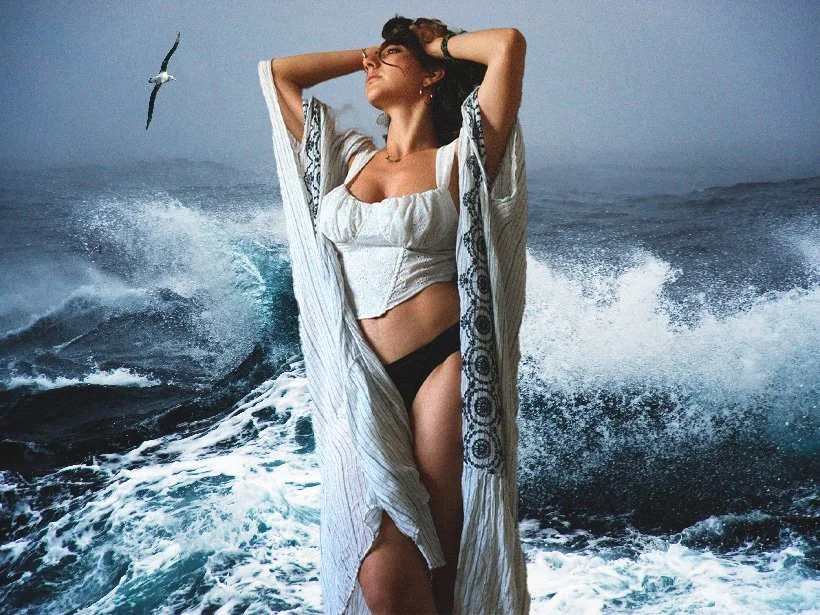
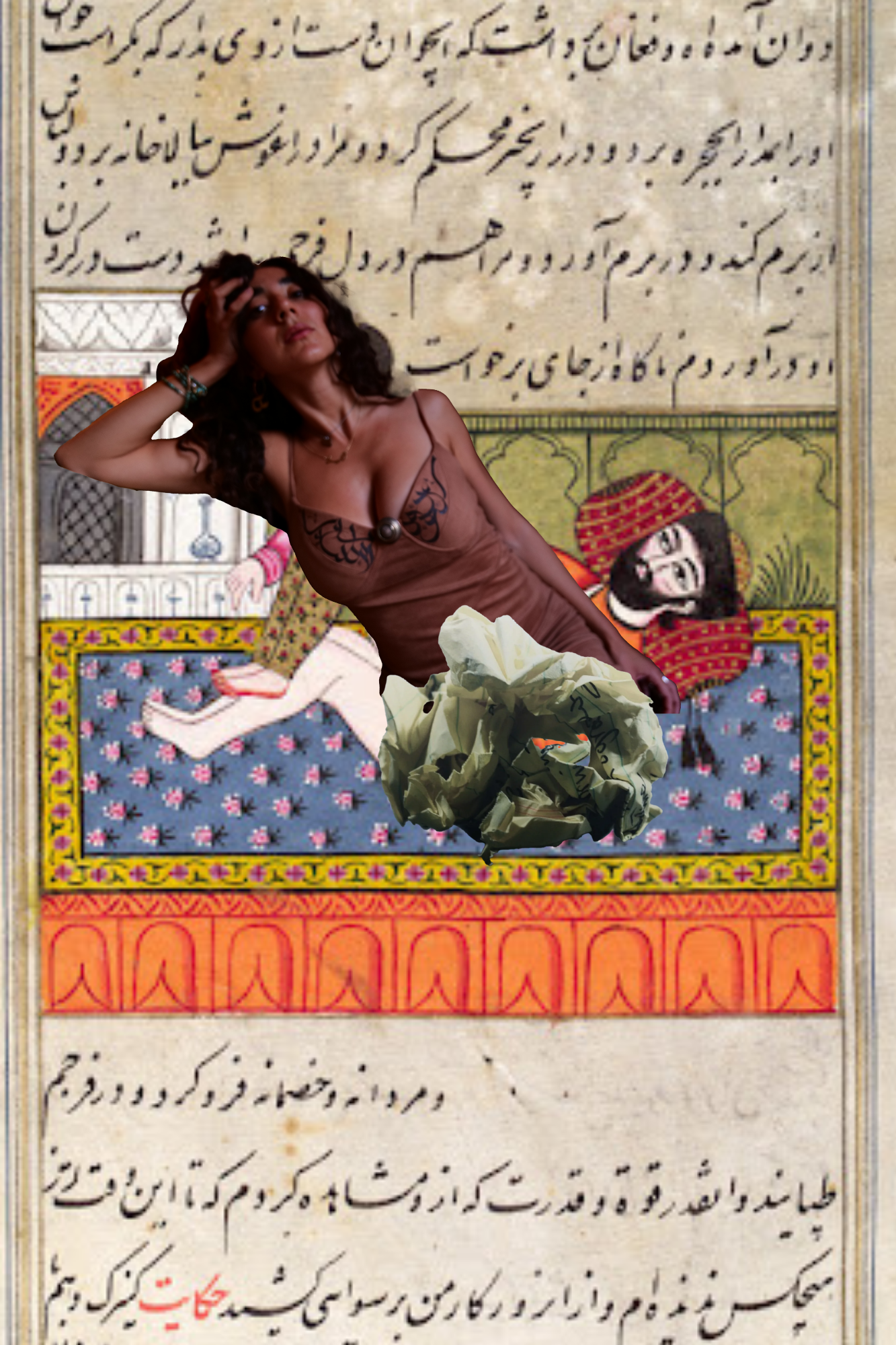
I want to first establish that sensuality is political — particularly because of where we come from, what we’ve lived through, and what it means to inhabit an Arab body in this era.
It is political for the Arab whose sensuality continues to be occupied by a religion that has been edited to suppress the feminine and to disable one of the most powerful forces in the body sourcing our autonomous sense of direction. Severed from it, we become sightless, terrified, obedient. Then, it is political for the intentional manner it invites the world’s gaze and senses towards a body facing layers of erasure. It is proof of life against the invisibility and silence imposed on the Arab people, denying us our vulnerability and humanity. And, sensuality is survival; it is a life-saving form of protest that holds a vast space for individual expressions of visibility; it is embodied defiance, a vessel for the message: ‘no, I will not disappear.’ Third, through the use of shame and exotification, we have suppressed the medicinal and healing qualities of sensuality, and with that, erased its revolutionary history. We come from a land where a very long time ago God was once worshipped as woman, and during the great goddess era, there were women who served in temples and employed their bodies as sacral tools of the divine. As a writer, I am deeply curious about this discarded history of divine sensuality, and much of my work attempts to understand what it means for a society to remember the body as medicine…