…a forgetting so profound that we have lost even the memory of what we have forgotten.
–’Neoillusion’ by Niilartey De Osu
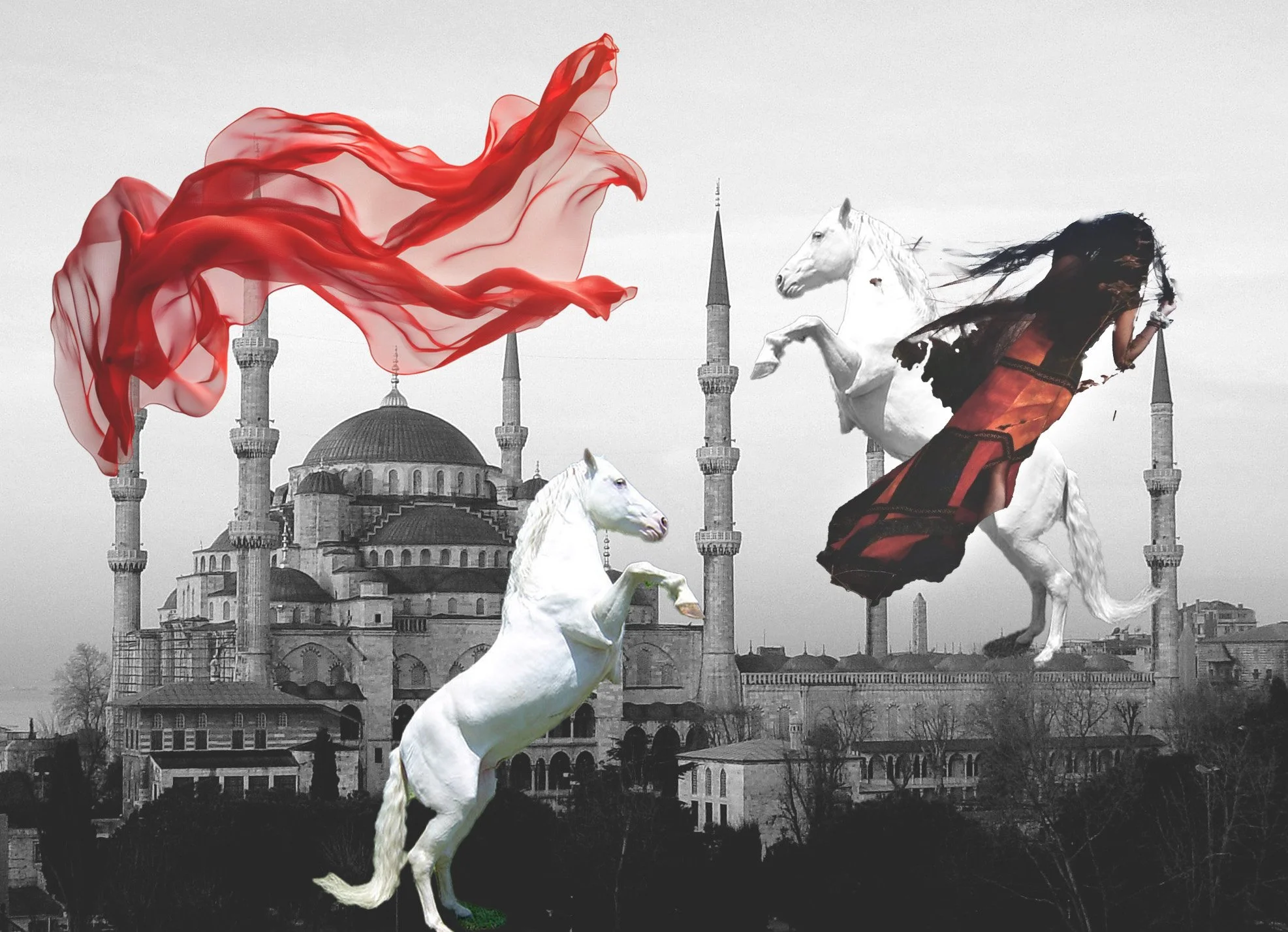
“There is a tolerance for all acts as long as they remain secret...we cannot live well when we’re afraid, when we feel guilty.”
A green bird sits on her shoulders while she drives her 1999 Ford van along the Hudson, a river that flows both ways. The radio delivers company into the void of a woman surrendering to the road, her hands guided by the winds of impulse. She has tried the charted life, to assign destination to movement but every decision illudes her. Like dew, each ‘I will’ escapes her before she has the chance to touch it. To hold it. To become what her mind has drawn in the long drives of the open road.
She is seeking something lost so long ago. Many attempt to find out what it is she’s after, and to these strangers she offers fragments of scripted answers she hardly believes in enough to deliver. She hates them for their questions, for having to confront again and again her own confusion through the same innocent interrogations. She mutters something about home, about losing home, about longing for a yellow lamp and soft curtains. It will be many more miles and years before she learns that what she is searching for is the home of her own flesh, the river of her own blood.
***
The Arab woman without a tribe is a woman moving against herself and towards herself, into the abyss of the open road and back towards the tidal rhythm of a family driving her departure. The Arab without the tribe lives a double tragedy, a novel that moves both ways, a woman wounded by a people wounded by the world. And so she moves through the world holding her truth, this deeply inconvenient truth, between stories she writes and confessions she destroys.
This is to say, we are far more than romantic passages about homeland and diasporic memories. More than sugared cups of longing for something that once was and never could be. We are this and novels more, if we could only be given the space to move away from the anticipated narratives held by the army of our audience.
We – Arabs assigned the art of longing and romance– carry the dirt of country too. We drink the homeland’s black water in the miles we drive away from our families, who have betrayed us as much as our country has. There is complexity to our rage, layers to our grief. I can drive you through the whole region of mine– if only I’d be given the chance. But for what I have to say, I am often not.
In acting we learn that our capacity for truth is measured by the distance of opposites we are able to carry at once in our mind. In our long gowns of survival, in the preserving desire to stand tall above the rubble that arrives in blurry images of streets we once breathed in, we reject the burden of contradiction. We mourn and scream – as we must – against our wounded land. But tell me, where does the Arab woman go with her scream when the wound lands against her own body?
This is not about the equality of wounds, one is unquestionably larger than the other. But is there any space left, any tiny crevice left for the woman whose body is also the land, to deliver her howl into the ceremony of rage? Or have we, in our enormous grief, erased the other chapters in the manual of justice, and kept only the one that holds the white hand accountable and no other?
When we study the quilt of Arab existence, are we daring to question the fragments of space where we did not allow certain narratives to arrive? If we are waiting for the right time to explore our interior shadows, against the attacks of the exterior ones that approach us daily, let us admit that that time will never arrive. And I believe we carry the responsibility of bearing both an exterior and interior gaze: the harm done to us, and the harm done among us. But where is our capacity to witness – and record – the indigenous and foreign delivery of pain?
I have witnessed how our cameras and our gaze turns away when the knife is in our brother’s hand, when the one delivering the wound shares our same language, our same native roots. But I cannot turn away. I was assigned to live in the proximity of some of our darkest shadows as Arab people. And it has made me an exile of my own community because I have seen too much. I’ve witnessed and listened to testimonies of the most disturbing hypocrisies among our own, so many unrecorded and unknown in our desire to close our curtains against the invasive and demeaning eye of the world that wants the convenient and convincing narrative of our barbarism.
A few years ago I tried to share these testimonies, most of all — my own. But I wanted to sleep the night. Every confession shook me with the possibility of consequence. And I want to say this: when artists roll up their sleeves to work with the heavy laundry of Islamic traumas, they should not have to question whether they will survive the wash.
And in wanting to live, we welcome warmly to the stage any artist who will gather us into soft passages of dough and harras and coffee and sittis and lemon trees. And if there is rage, and the rage is directed across the line, we hold it with the speaker. But when an artist arrives with a mirror, to pause on the interior, to read to the Arab people their beauty and their shadows, then we draw the curtains. Label the artist a traitor for wanting to deliver a letter that betrays us in its truth.
***
And here is the discarded truth–
I am the daughter of a farmer who grew his beard into a statement of surrender, who rejected life and delivered to himself each day an early punishment to spare him from the later one he spoke endlessly of. I am the granddaughter of a doctor who believed that tragedy was divine punishment, who laid down his scalpel on the day of my father’s accident and spilled the rest of his life into a cruel solitude and a civil war of guilt and sorry. I am the displaced seed of a land that bears deep scars from the violence of religion claiming possession over her body.I am the product of that misused religion, rewritten to conquer vulnerable minds and make a prisoner of pleasure. I am the final draft of pain seeking solace in the soulless translations of men anticipating the desire for relief, giving all the answers and leaving its followers no air to breathe.
I am the witness of stories I wasn’t prepared to receive, spilled into my ear of religious men, some I knew, who were loved for their holiness, who did things with their bodies and their hands in the dark that threatened not them but us, who wanted to tell on them. And we lived and lived in silence. And when we tried, after years, to enter the institution of Arab identity with our testimony, with a narrative opposite to their protective ones, holding an antonym that would deliver balance and order to our truth, we were exiled. Called traitors for wanting to trade the easy lie for a far less delicate truth. Something that would firm the ground beneath us. Grant us something safer to stand on.
I write this as testimony to the unspoken layers of Arab life that pass unrecorded. How we are punished by our own, in the circulation of this punitive translation of Islam that has wounded so many. I am trying to slip my little story into the museum of our existence, but there is no room left for us in the glass case of testimony.
And even when we know there is no space for us, no audience wanting to hear this, still we try, if only for this tiny desire to live a life that is not the darkness we hold. And we do this knowing the cost is enormous.
The erasure and censorship of stories among the Arab community is far more damaging than you could imagine. I have seen women, including myself, slip into ghost lives where they live the poison of their unreleased howl against years of aggressively enforced religion and Islamic traumas that cannot be spoken. I have witnessed the disappearance of a woman’s proof of life from her eyes simply for not finding the chance to voice what begged to be witnessed. Yes, we recognize that the Arab experience is a layered one, so long as the layers don’t disturb one another.
There is an ecologist who explained how seeds are modified to withstand a level of poisoning (from fertilization) that an unmodified seed would never be able to survive. This is how so many Arab women have experienced their upbringing: as that which sought to fundamentally alter who they were. And altered so dramatically, they live through years of shame and warning and doctrines that contradict every feminine instinct.
In the end, they arrive, just as the orange arrives, to its destination, resembling one on the exterior, and holding nothing of the original life in its interior. The shape of fruit without the taste of one. There is no other way to survive the pesticide of guilt sprayed over her body every day with the eyes that receive her, destroying her before she’s ever had the chance to encounter herself, to retrieve something of her original being for a later, safer time.
From her Islamic school to the mosque to her home, she has found not one place to sit with herself for long enough to encounter that still presence within her that knows no religion and no institution but knows God better than either could be taught to her. They left her no time and no space to ask questions that simply by asking them would show her what she needed to see. The fear of them was so intense that even her dreams were theirs, entering her bed with their warnings and black shadows.
In the early years, she still held onto the memory of who she was and who she would return to once given the chance to escape. But as she grew and as their tools sharpened against her becoming and her body’s betrayal – announcing danger in the hallways in its new shape and its sudden desire to be seen, to be touched – the memory of the woman she would come back to slipped further and further away from her until all she was left with was the crowd of them, inside her, and no chair for her own voice, no desk for her own desires.
***
The sun surrenders the last of itself above the water, dies the easy death of one who knows she has done what she has come here to do. The tremor of her departure releases a colored song against the paper sky, a testimony of presence and the wounds of those twelve hours.
She arrives to the St. Lawrence river hardly standing. She rests her bird on her knee, above the mountain overlooking the sailboats below. The sun is setting on a world she is just beginning to attempt to touch. She walks the earth without a body. The road and the soil and the water is what she has to hold her to this world, to make her feel real, to confirm that she is here, it is not a dream. She pays teachers to teach her how to breathe, how to deliver breath into parts of the body stolen from her – just as our land is stolen, just as our sea and air is stolen. She sets up a tent inside her belly, tries to find a source of water around the rubble of her organs. The house is gone, but for now there is a little corner where she sets a candle at the base of her spine, and begins the journey of writing herself back into the country she once was.