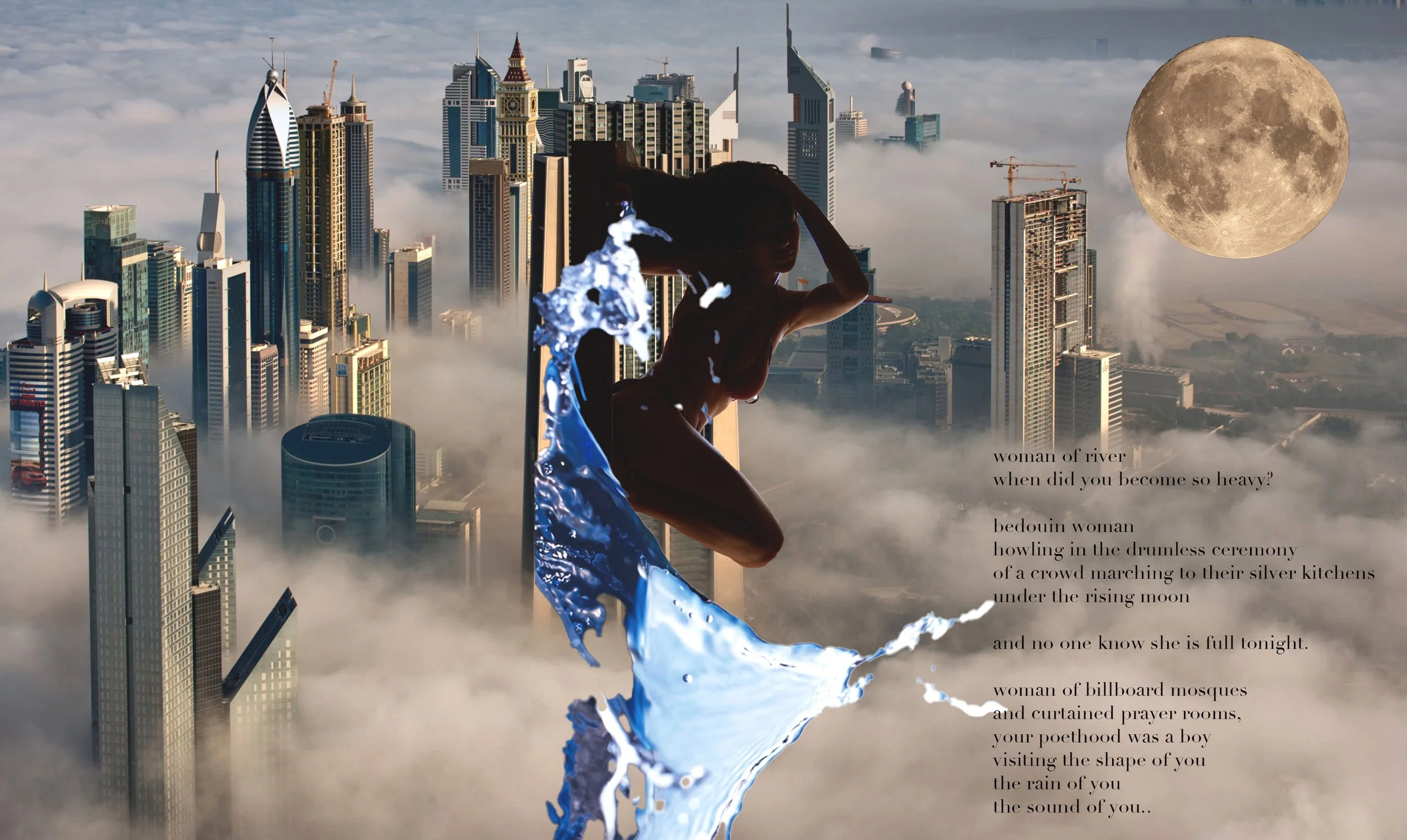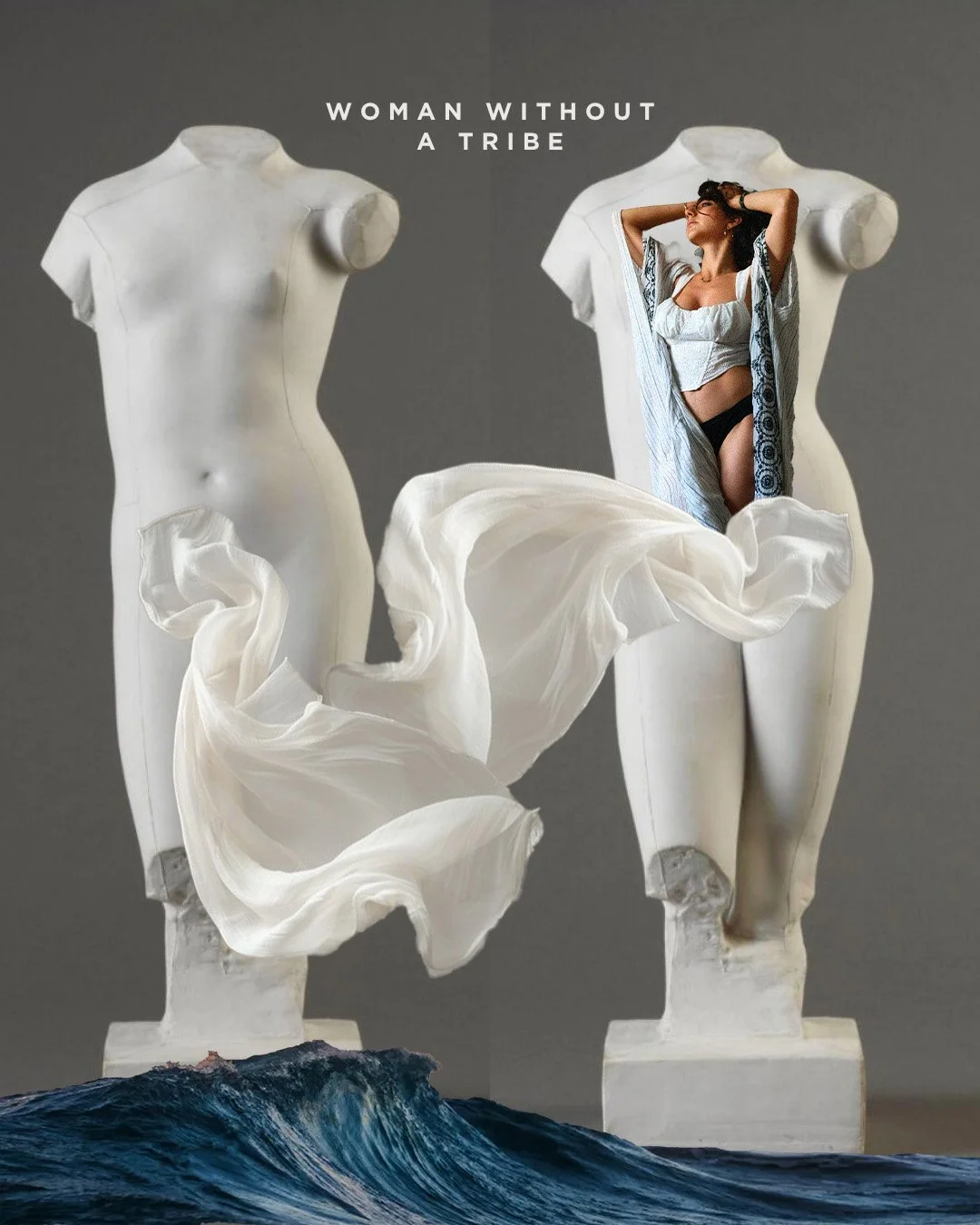
“Does the scandal lie in the deed, or in the revelation of the deed? Who is asking the question? My story is no scandal... the scandal was in the secret. But the secret is no longer. ”
So much of this journey has been about listening to the tribeless temple of my body. Every record is a study of the village in me, the woman I was, the woman I am, the woman wanting to become, through me. If only I can be still.. if I can extend the encounter long enough to listen.
The camera is a shovel, excavating what is buried in me. I am equal amounts Virginian soil and Damascene dirt. This makes me two women with four legs, a hundred desires, going everywhere and nowhere, pursuing everything, and nothing. Leaving many dances unfinished across the fields of my life.
There is no other way to live as an Arab woman without a tribe except to inhabit the full territory of my body — to challenge each occupied corner and to not relent until I’ve conquered the land under the foreign feet of my mother, my father, my grandmother, my grandfather, my teachers, my lovers, and every voice that arrived with violence.
The tribeless understand, in the deepest sense, that this life isn’t ours. We witness the half-deaths of many lies and aren’t afraid to finish them. To finish the many deaths. We don’t pretend not to notice the wild eyes meeting us in the kitchen, wanting us gone.
To you it looks like running. To us, it’s a capacity for truth that comes from our indigenous solitude. We don’t need the lie to protect us from our fear of exile because we have never belonged, and we have already lived the betrayal in the absence of the tribe when our little bodies needed it most.
Sometimes what we are denied protects the most sacred parts of us. When we begin without our birthright into belonging, without a hundred hands and drums on the other side of the wall, when we are born into the suburb silence and sacredless rooms with empty chairs, we are born into the gift, and the responsibility to move like the ones who never have to answer to the conditions of the tribe. For love comes with laws; and the earth relies on the lawless unloved to howl against the shadows of the tribe.
The tribeless woman is a mirror and lives the cruel consequences of being the mirror. Part of her reckless work carries revenge for her silent birth, for the years of searching for hands to receive her and finding only her own, and many times not even her own. When there is no tribe to hold you, it takes many years to figure out how to handle the weight of your own body. How to hold what has never been waited for by the border of the unborn and born.
Art avenges the absence of the tribe in its truth. There is no one to ask permission from and so our hands become possessive. We think all stories belong to us, all the pain is ours, all the loss is ours. Instead of learning to share our meals, we were raised to hunt for our own bread, and so we live in the one-bedroom of our hearts, and our solitude becomes its own violence.
Touch, for the tribeless, becomes the medicinal journey of splitting the bread of our life among the hands we denied because we feared coming to know belonging and having, for the first time in our life, a position we fear losing.
We move from lover to lover because it is safer to be held by one, to yell at one, to lose one. How does a woman who has never known the feeling of being in the tribe, open the tiny room of her body into what it suddenly begins to long for? How do you hunger for a meal you’ve never tasted, for mamas and drums and fires you’ve never lived, for the ceremonies of love you’ve never participated in?