“God is homeless, and the house you built him is a lie. ”
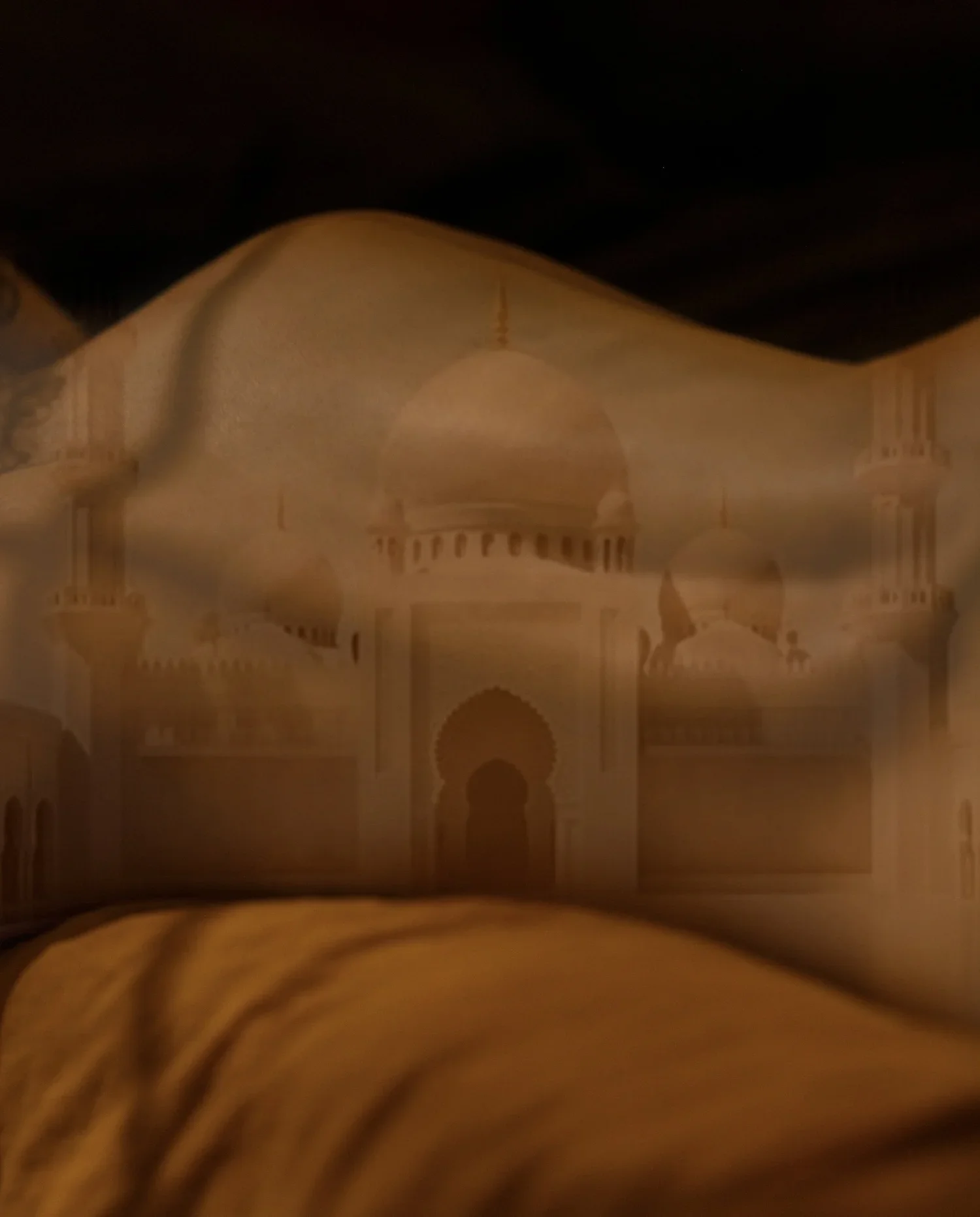
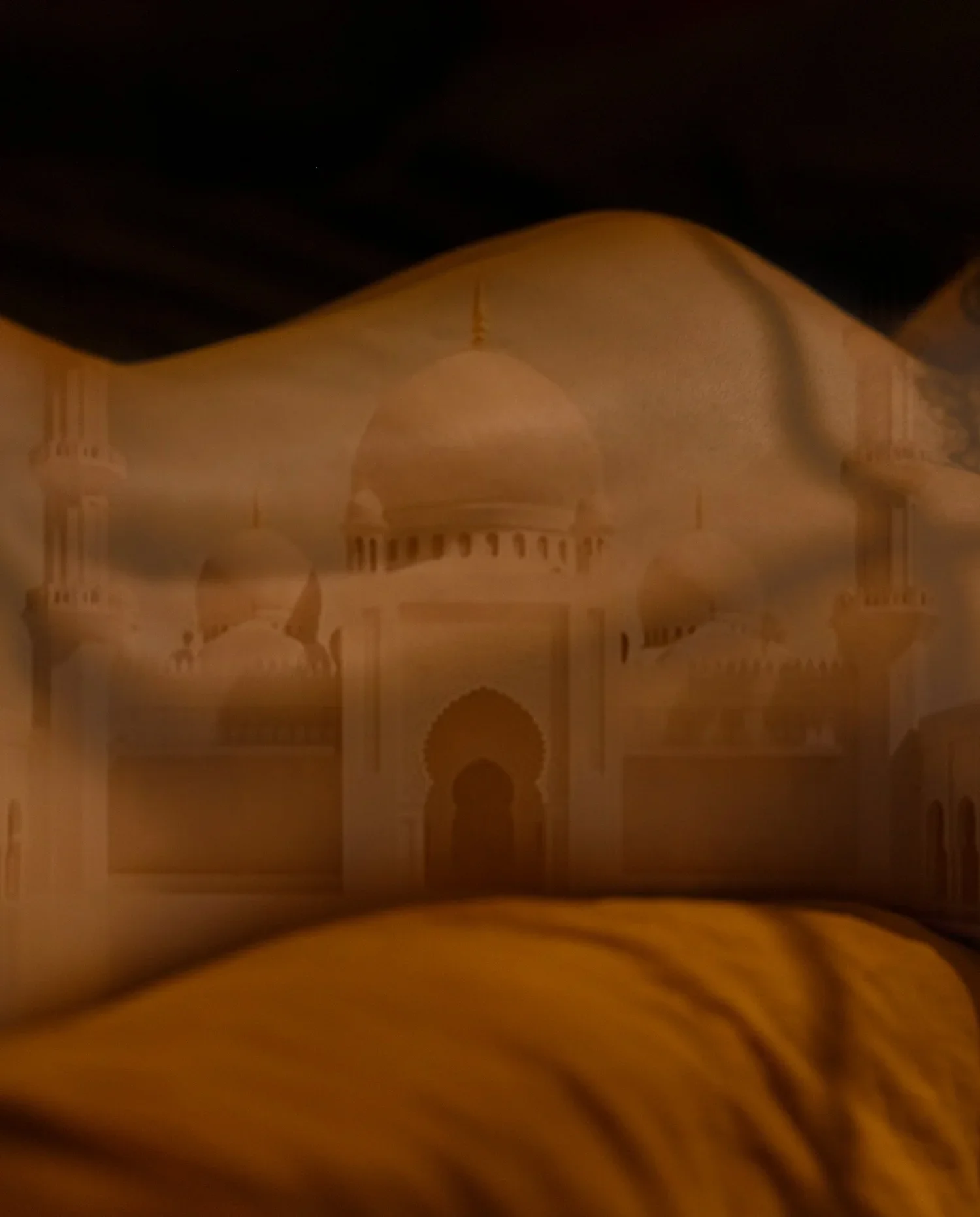
a meditation on what a feminine led architecture and prayer look like
“She could not accommodate herself to a small and regimented reality. And so finally, after a couple of decades, she created a new one. From the inside. ”
There may or may not have been another mosque.
Built with Sienna clay by the hands of one woman, guided by the winds of her exile, protected by the drums that disguised her escape, summoned by the god that orders our departure from the tribe — obediently, she disobeys.
Arriving where the earth is softer, where there is only the ivory air and the umber earth to reflect her image back to herself, she removes her dress, and for seven days, she builds a temple: a mirror of her form. The body is her composition, telling her to raise the dome there, soften the descent here, The house of her soul guides the architecture of the first mosque.
Adopted by the desert, baptized into all religions and to one god, she shapes the last of the clay, and sits by the doorless entrance, waiting.
In the valley of a solitude you’ve never known, watered by fires, warmed by rivers, she sleeps in the open minaret facing the path of the few that find her.
Exhausted by the long walk, uncertain of the voice that led them there, each one finds themselves barefoot in the red mosque, waiting to be shown what to do. She smiles, lays their bodies over her lap. They’ve come to learn from the exiled prophet, in a primordial earth that had nothing to erase because nothing had come. They had heard of a woman with a belly that could speak. They came to serve her, to watch. She received them in their first vulnerable hour. Then, she would disappear. It’s the way of a real prophet.
The day after their arrival, they would wake up to lemons and apples, tenderly cut and covered in jasmine, sprayed with rose water. Somehow, her absence made her more present. Her instructions delivered through silence, her love, experienced only in their sleep, and deeper than any waking love they’ve known.
Each one learned in their own way, on their own time. There was no hurry. No tick-tock tick-tock measuring the body’s distance from hell, its pre-destined exclusion from heaven. The call for prayer was guided by desire, as sex is, as laughter, as tears. There was no masculine division of the world, no pillars of cement conquering you in its permanent erection.
A simple, one page prayer book taught you that the call to prayer and call to sex came from the same navel chord. The womb that shook to be spoken to be spoken to was the same that delivered the desire to speak.
There was one line of instruction for prayer: to enter the mosque, you must undress.
And because the howl for prayer rose from within, and every woman drummed to a different rhythm, each one prayed alone, at separate times.
Prayer was orgasmic — a pilgrimage through the summits and crevices of the body, circling the organs 7 times before landing in the blessed waters of her well. There is no finality. Prayer is in the initiation, the pause where whispers are poured into the body. Here, prayer is made silently. The purpose is not to speak, but to be spoken to. It is the sudden desire to listen until climax — the eruption of a new spring in the parted earth of a body receiving its answer.
Engraved on the walls of the prayers room was a singular Arabic line that read:
bayna al wada’ wal wasool, hunaka sahrat al wihdeh, sahrat al ghyab, wal mot, wal haya, honak — tantathiroka al illah. Tantathiroka hadafalk.
between departure and arrival, there is the desert of solitude, the desert of absence and death and life, there — your god waits for you. Your calling waits for you.
“The space where she meets her God is intimate, womb-like, and profoundly personal.”
II. The Sheikh
One man worked at the mosque. Beautiful, wanting only to be wanted, used. In his quiet hunger, he was loved by every woman who came.
Each visitor was given her time with him. He belonged to no one, and to each of them.
When they were ready, they would walk to where he waited, and he would lead them into the desert — drop by drop, he would clean the men off their body in the red river of erasure.
Don’t tell me some women need to be healed. Most of us want our bodies washed of the memory, each organ wrung through of the old brown waters, the stain of the fingerprints on them.
In the world of the red mosque and its surrounding territory, speach was the only sin. It didn’t matter. It never took them long to discover how much more could be said in the silence, in touch. How soft the begging felt between their mute lips.
When he had washed each corner of her body, he would open her chest, remove the heart, and place the tip of his tongue against the black drop of ink that remained there.
He lays her bare body by the banks of the river, covers it with the desert moss of her new home. He waits for her over the dunes, holding her in the safe territory of a gaze that never turned from her. A green bird lands on her body. The sand does its work — merges their two bodies into one.
The last rites is a long walk to the summit of the brown nippled mountain, where he runs his hand along the length of her throat, releasing a shower of screams over the land. Emptied, he carries her down.
“...in which any distinction between spiritual longing and sexual desire becomes irrelevant.
The Sufi ecstatic Rabia embarked on the spiritual quest without either the support or the constraints of the prevailing religious establishment, and did so at a great cost. Independent of any authorities to back [her] up, [she] surrendered to a kind of free fall, involving both ecstasy and loneliness.Let’s find the brave women who have walked before us and see how they navigated the journey.”
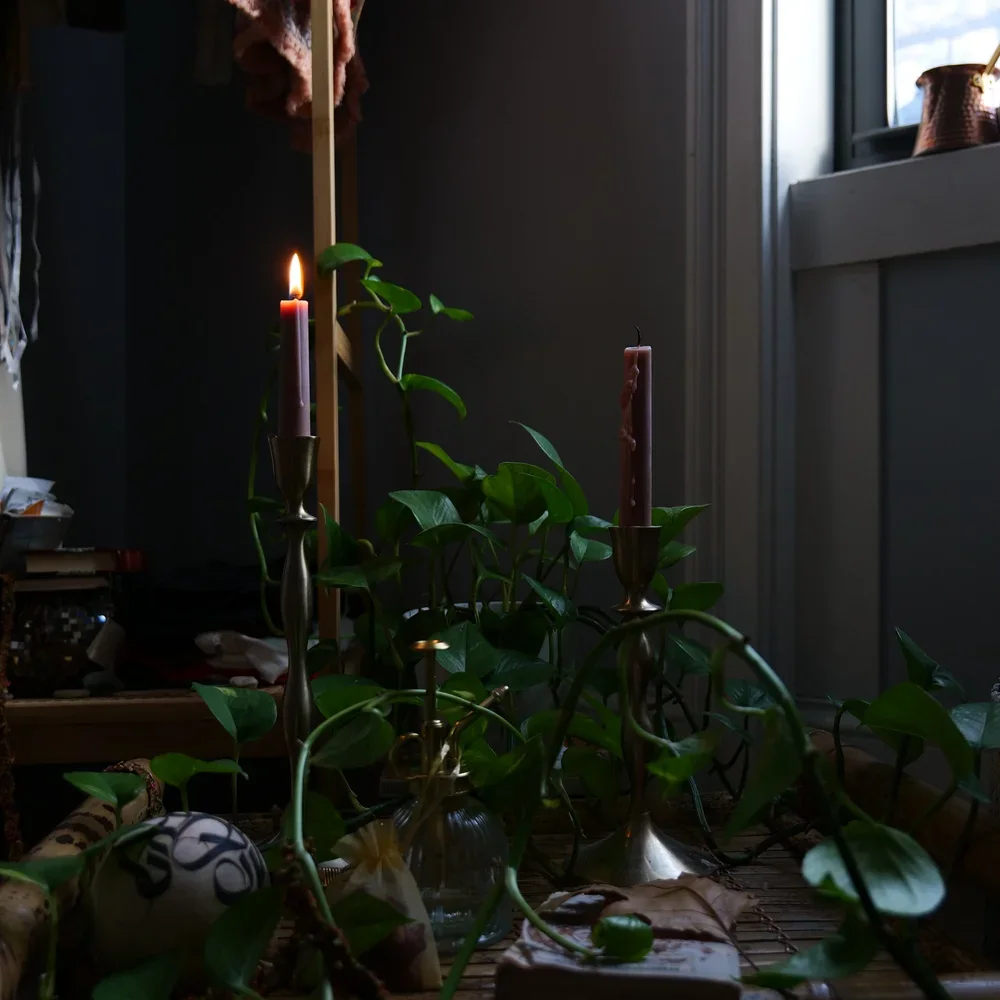
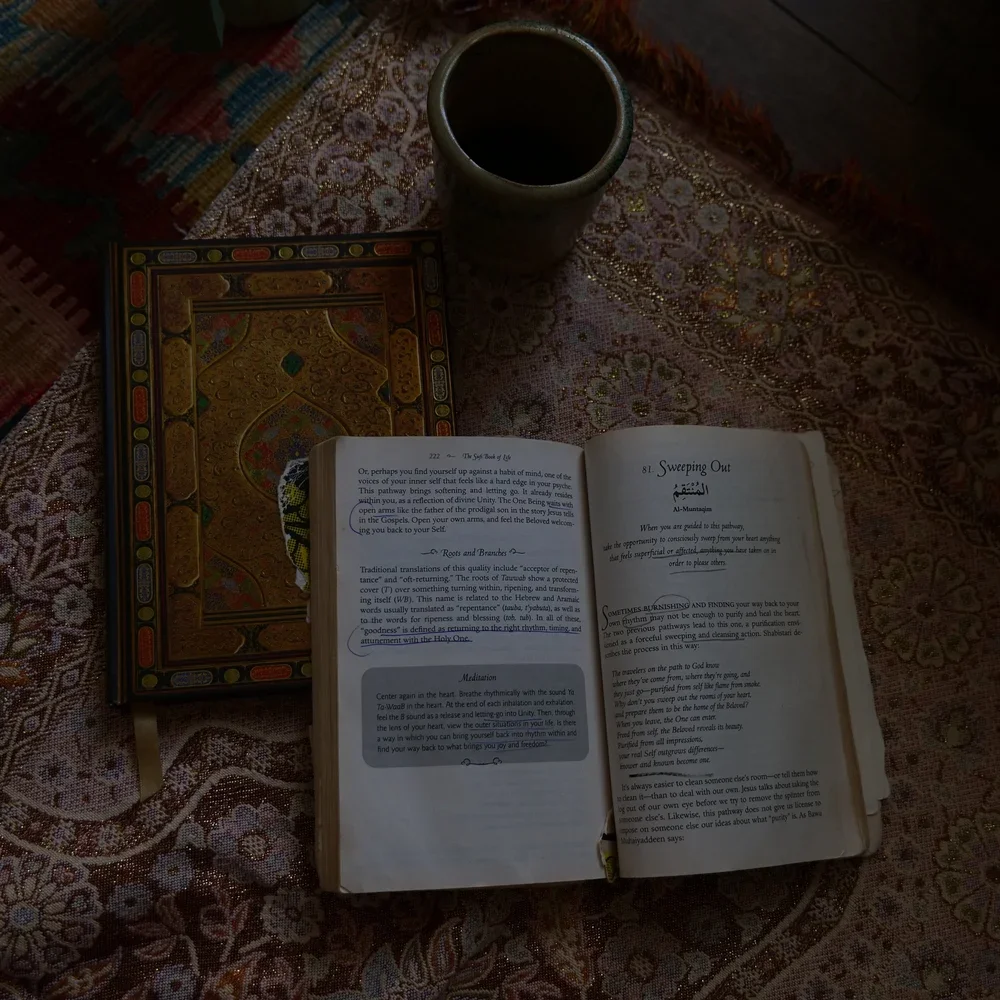
“Most of the mystics I adore have had a similar hybrid of devotional and non dual experiences and outlooks. Maybe you are of this breed of seeker. Let us engage and even invent practices that feel aligned with our spiritual sensibilities.
Trusting our soul’s innate knowingness, flinging ourselves into the mystery. Practicing in multiple spaces, with diverse communities and alone, allowing your edges to melt into one.”